


 ລາວ


Text and Photos by: Mick Shippen
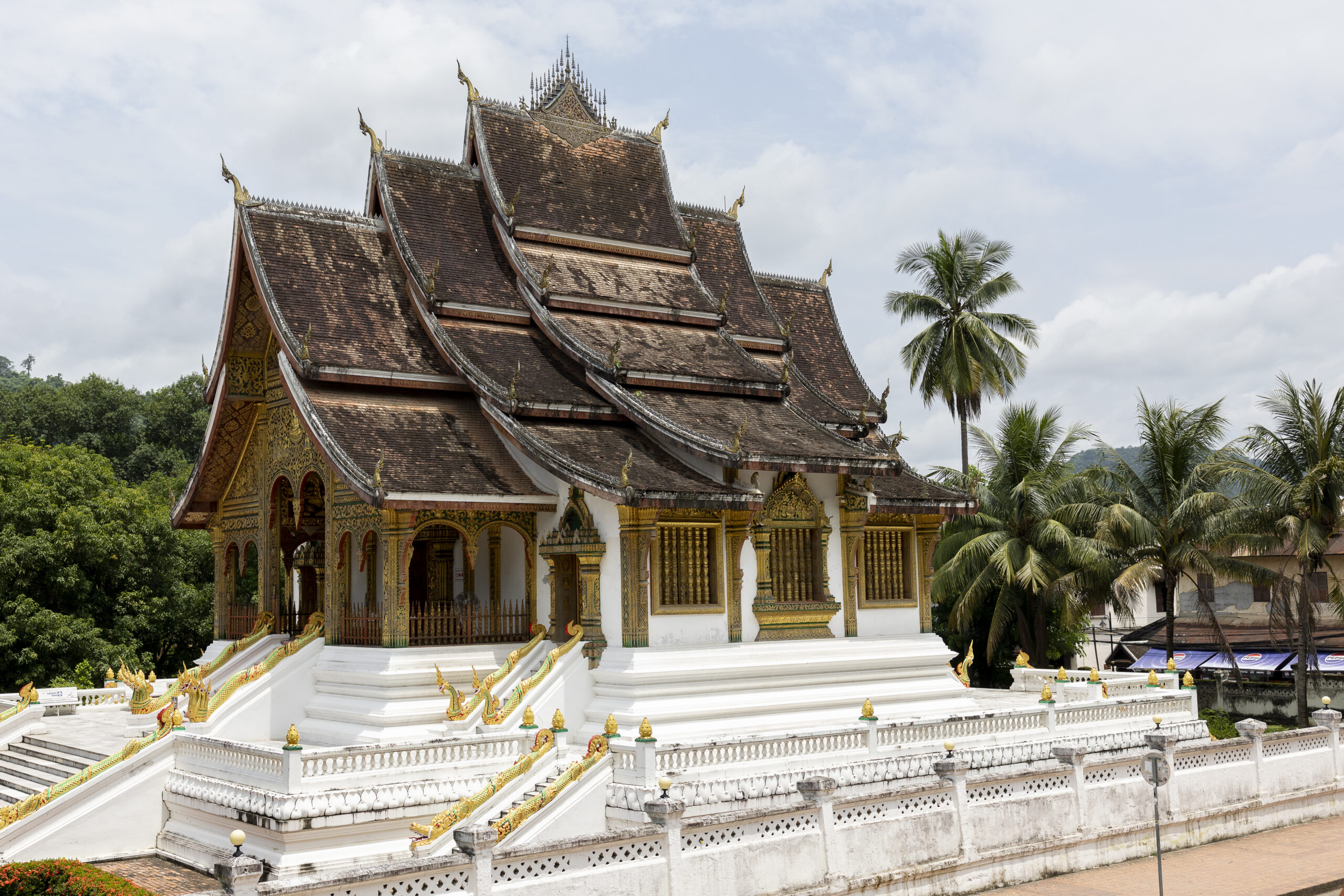
The shining glass mosaics on the red walls of Wat Xieng Thong in Luang Prabang show scenes of everyday life in northern Laos. Created in the 1960s, the mosaics remain surprisingly familiar today. They show village life shaped by Buddhist traditions and the changing seasons of the rice fields. Food is everywhere in the artwork, from growing and gathering ingredients to raising animals, fishing, preparing meals, and cooking.
Long before these mosaics were created, Luang Prabang was already known for its distinctive cuisine. Its culinary reputation later reached a wider audience through Traditional Recipes of Laos, a collection of recipes by Phia Sing, a chef at the Royal Palace of Luang Prabang.
Alan Davidson, British Ambassador to Laos from 1973 to 1975 and later a respected food writer, helped compile the book. During a royal audience, Davidson received the notebooks of the late palace chef Phia Sing (1898–1967), which contained his recipes. Among them were unusual dishes such as lon som, a curry made with pork, eggplant, long beans, ginger, and fermented fish roe, all gently cooked in a light coconut milk broth.
Today, a small number of chefs and restaurants are bringing renewed attention to ahaan xao vang, or “palace food.” However, many local people still prefer the more rustic dishes that have long been part of everyday life.
One of the best-known is or lam, a hearty meat and vegetable stew flavored with mai sakhan, or pepperwood vine. Other favorites include sai oua phaen, strongly seasoned grilled patties made from pork or buffalo; spicy jeo bong, a northern-style chili paste; and steaming bowls of khao soi, a comforting noodle soup topped with pork, tomatoes, and fermented soybeans.
These dishes and many others can still be found at the grill stalls and noodle shops of Luang Prabang’s morning market.
A French Influence
Luang Prabang’s food is deeply traditional, but it also has some unexpected influences. Several popular dishes have roots in the French colonial period and have since been transformed to suit Lao tastes.
Perhaps the most obvious example is the baguette. Laos embraced the French bread and turned it into khao chi pâté, one of the country’s most popular sandwiches. A baguette is crisped over charcoal, sliced open, spread generously with pork liver pâté, and filled with ingredients such as pig’s ear, pork floss, pickled vegetables, and spicy chili sauce.
Another example is lagu, a slow-cooked dish commonly served at Lao weddings and family gatherings. Inspired by French beef ragoût, the Lao version uses Asian seasonings to create something quite different from its French ancestor.
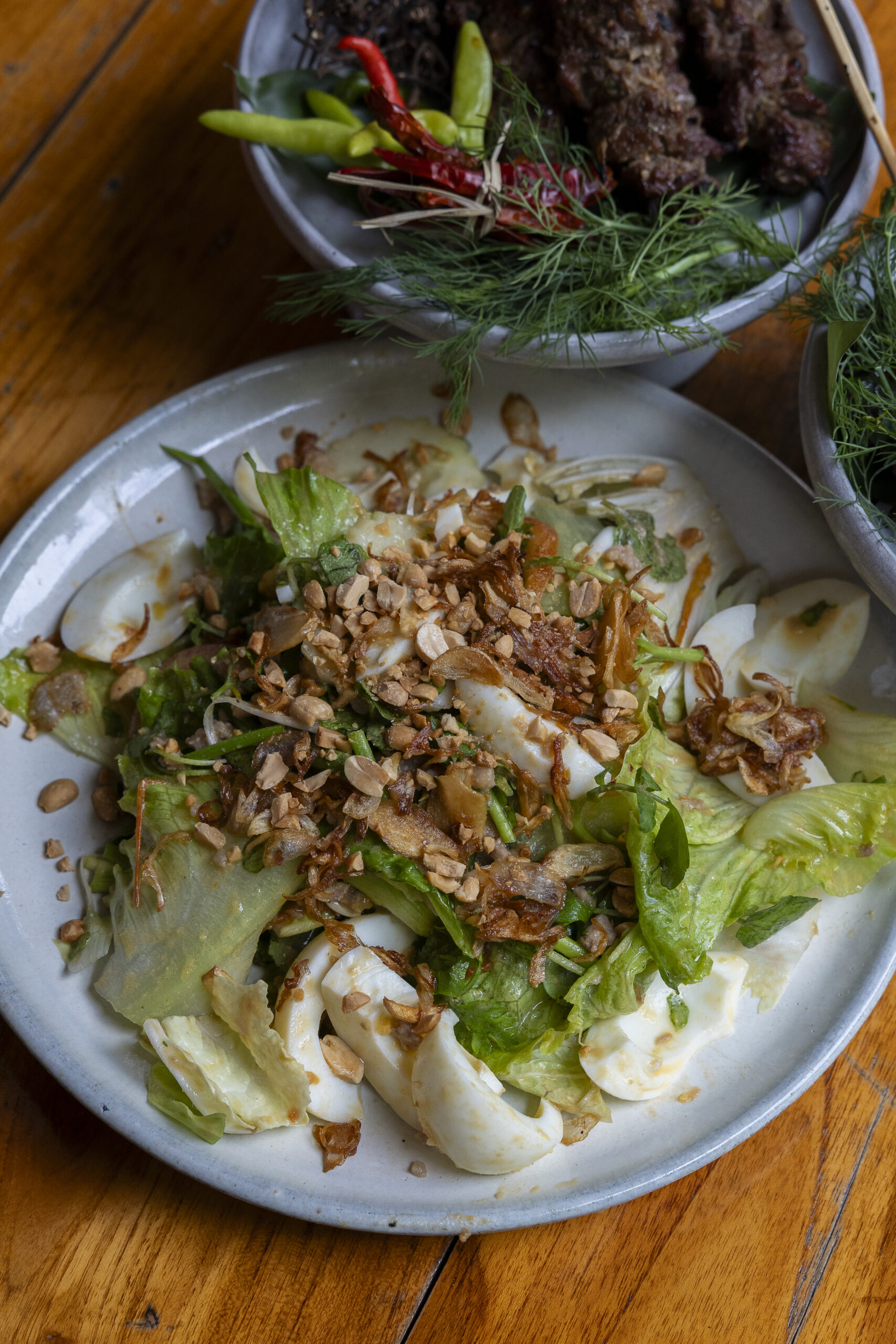
One of Luang Prabang’s best-known Lao-French dishes is nyam salat Luang Prabang, the salad named after the town itself. The vegetables are tossed with a rich, mayonnaise-style dressing.
Today, the salad is so deeply connected with local food culture that many people simply consider it a traditional Luang Prabang dish. It can even appear at baci ceremonies, a traditional Lao ritual held to celebrate important life events, restore spiritual balance, and bring good fortune.
A Luang Prabang Favorite
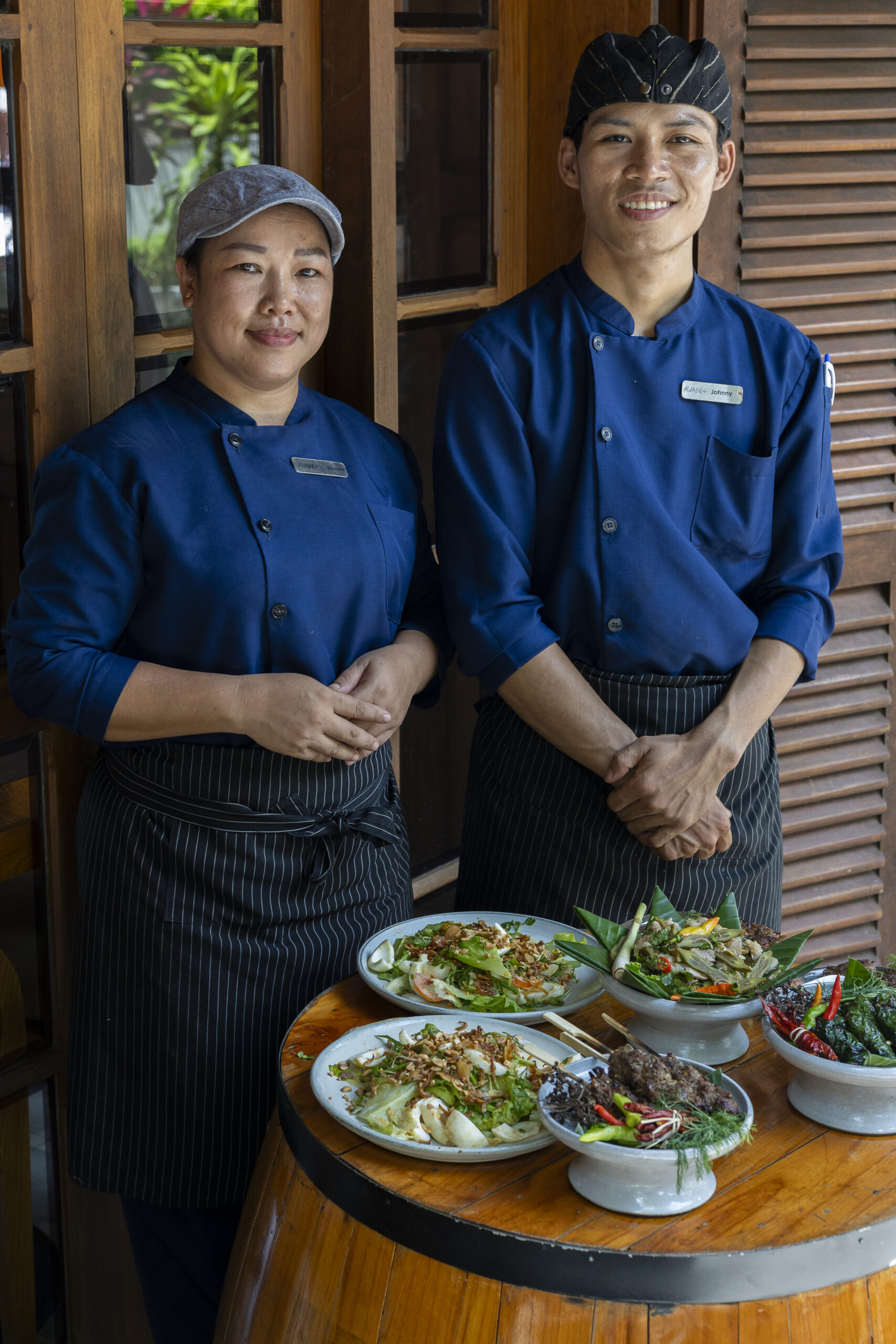
Nyam salat Luang Prabang is also a regular dish at Main Street Bar & Grill, the restaurant at Avani+ Luang Prabang. It is a favorite of Head Chef Davone, whose cooking covers many international cuisines but who has a special passion for Luang Prabang food and its French influences.
“There are actually two versions of the salad dressing,” Chef Davone explains. “Hon and yen, hot and cold, though actually they are both served cold.” The difference is that the “hot” version uses some cooked ingredients.
Mayonnaise, the Lao Way
Mayonnaise is at the heart of the dressing, but with a distinctly Lao twist. Instead of using raw egg yolks, as in traditional French mayonnaise, the Luang Prabang version uses yolks from boiled eggs. They set aside the egg whites and add them to the salad later.
Using cooked yolks may have developed as a practical way of preparing mayonnaise in Laos’ hot climate. “We also prefer to use vegetable oil rather than olive oil,” says Chef Davone. “Lao people consider olive oil to be too bitter.” The acidity is different too. Instead of lemon juice or white wine vinegar, the dressing uses freshly squeezed lime juice, an ingredient commonly found in traditional Lao salads.
Legendary French chef, restaurateur, and writer Auguste Escoffier might have been surprised by the idea of making mayonnaise from boiled egg yolks. But the method is wonderfully simple. You don’t need to slowly drizzle oil into raw egg yolks while worrying that the mixture might separate.
“You just need to break up the boiled yolks and start pouring in the oil as you whisk,” Chef Davone explains. “You then season boldly with sugar, salt, fish sauce, and lime juice. Sometimes even a little chicken stock is added.” The result is a rich and creamy dressing full of sweet, salty, sour, and savory flavors.
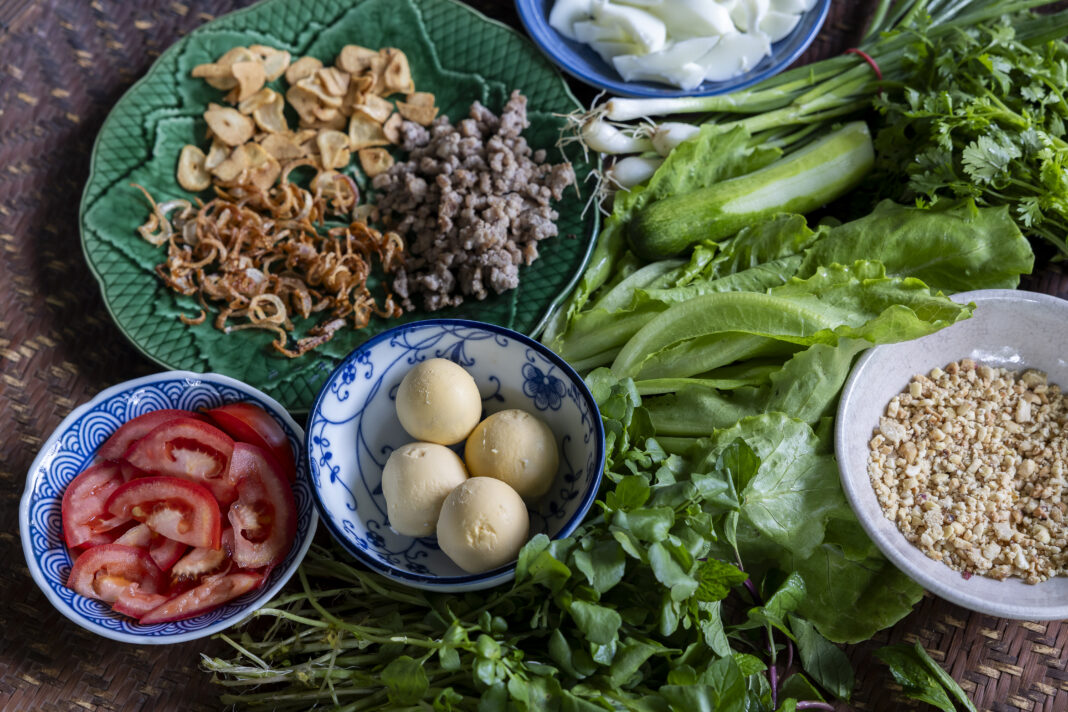
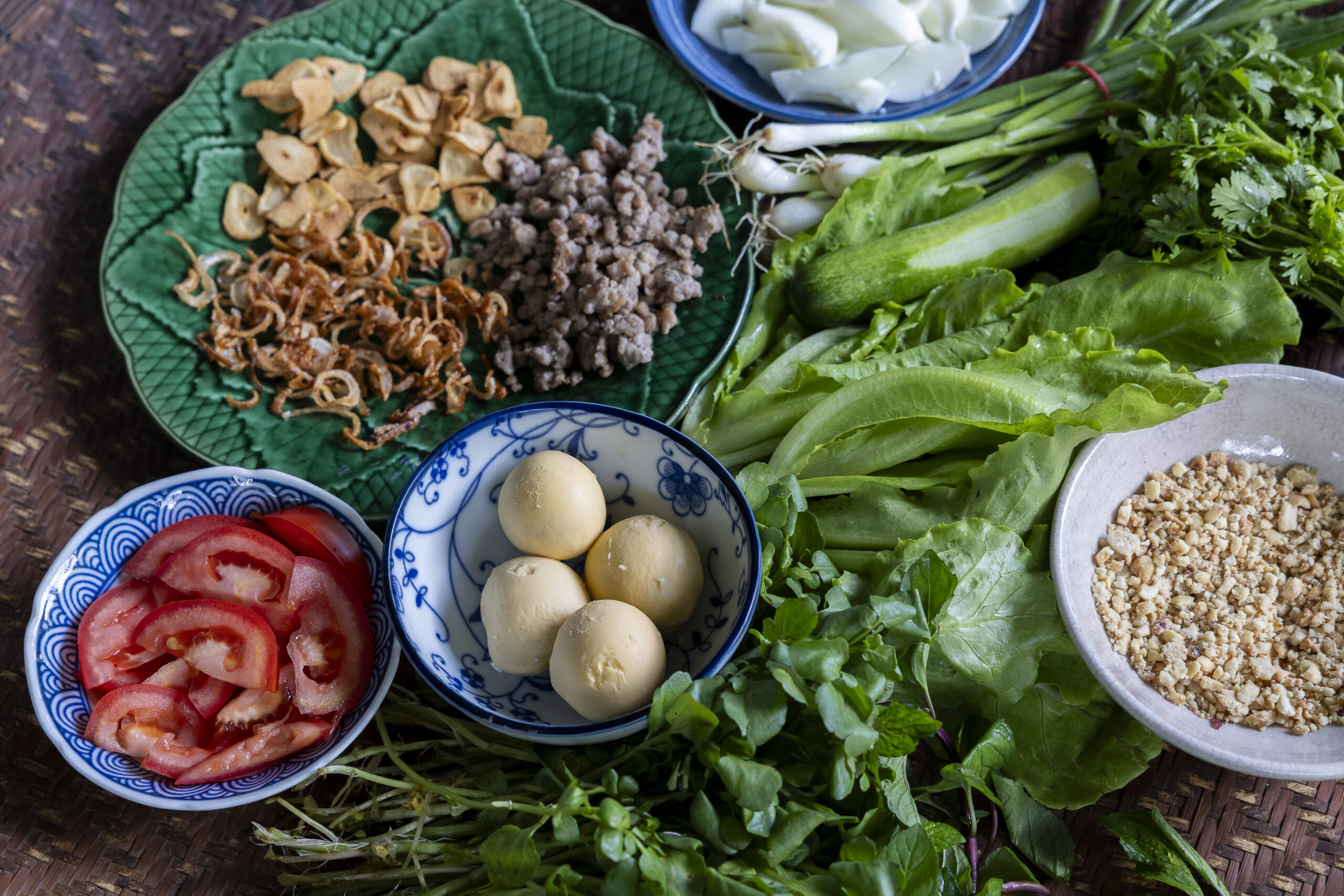
Chef Davone uses it to dress lettuce, locally grown watercress, chopped spring onions, coriander, and fresh mint. Sliced egg whites, tomatoes, and cucumber are dressed separately before being placed on top. Then generously cover the salad with crushed wok-roasted peanuts, fried garlic, and shallots.
For the hon, or “hot,” version, add stir-fried minced pork and tomatoes to the dressing. They add extra sweet, savory flavor and turn the mayonnaise a light orange.
When prepared well, as Chef Davone at Avani+ Luang Prabang does, the result is a memorable salad that brings together French cooking techniques and Lao ingredients.
Because the salad has such a distinctive flavor, it is worth choosing the dishes served alongside it carefully. Sai oua phaen, or meat and herb patties, a spicy Lao omelet, and a light, fluffy Lao baguette all make good companions.
More information:
Chef Davone offers cooking classes at Main Street Bar & Grill for visitors who want to learn how to prepare nyam salat Luang Prabang and other local dishes. Visit Avani+ Luang Prabang’s website for details.
Getting there:
Lao Airlines operates regular flights to Luang Prabang from Vientiane, Bangkok, Hanoi, Chiang Mai, and Pakse.