


 ລາວ
ລາວ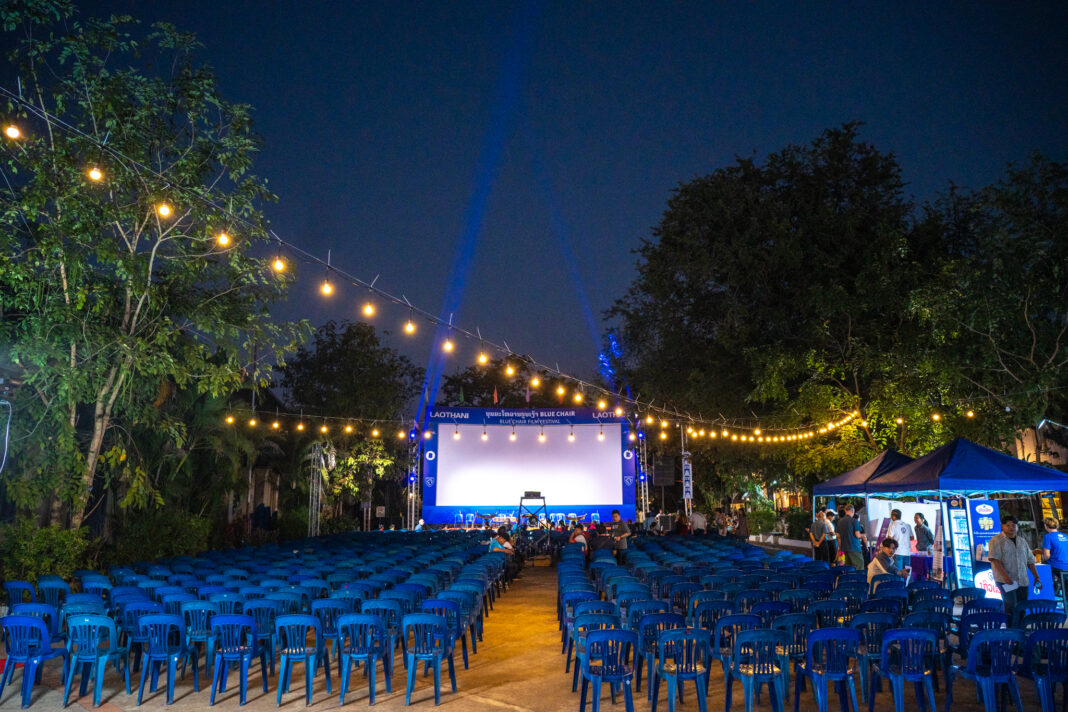


Blue Chair Returns to Luang Prabang
Text by: Emma Brown
Photos by: Blue Chair Film Festival
The Blue Chair Film Festival brings Southeast Asia’s most vital filmmaking to a town with no movie theater — and that’s entirely the point.
Luang Prabang has a way of making time feel negotiable. The mornings belong to the monks, the afternoons to the river, and the evenings — well, in early December, the evenings belong to Blue Chair. For five nights – this year, 4 to 8 December 2026 – this unhurried UNESCO World Heritage town becomes home to one of Asia’s most quietly remarkable biennial film festivals.
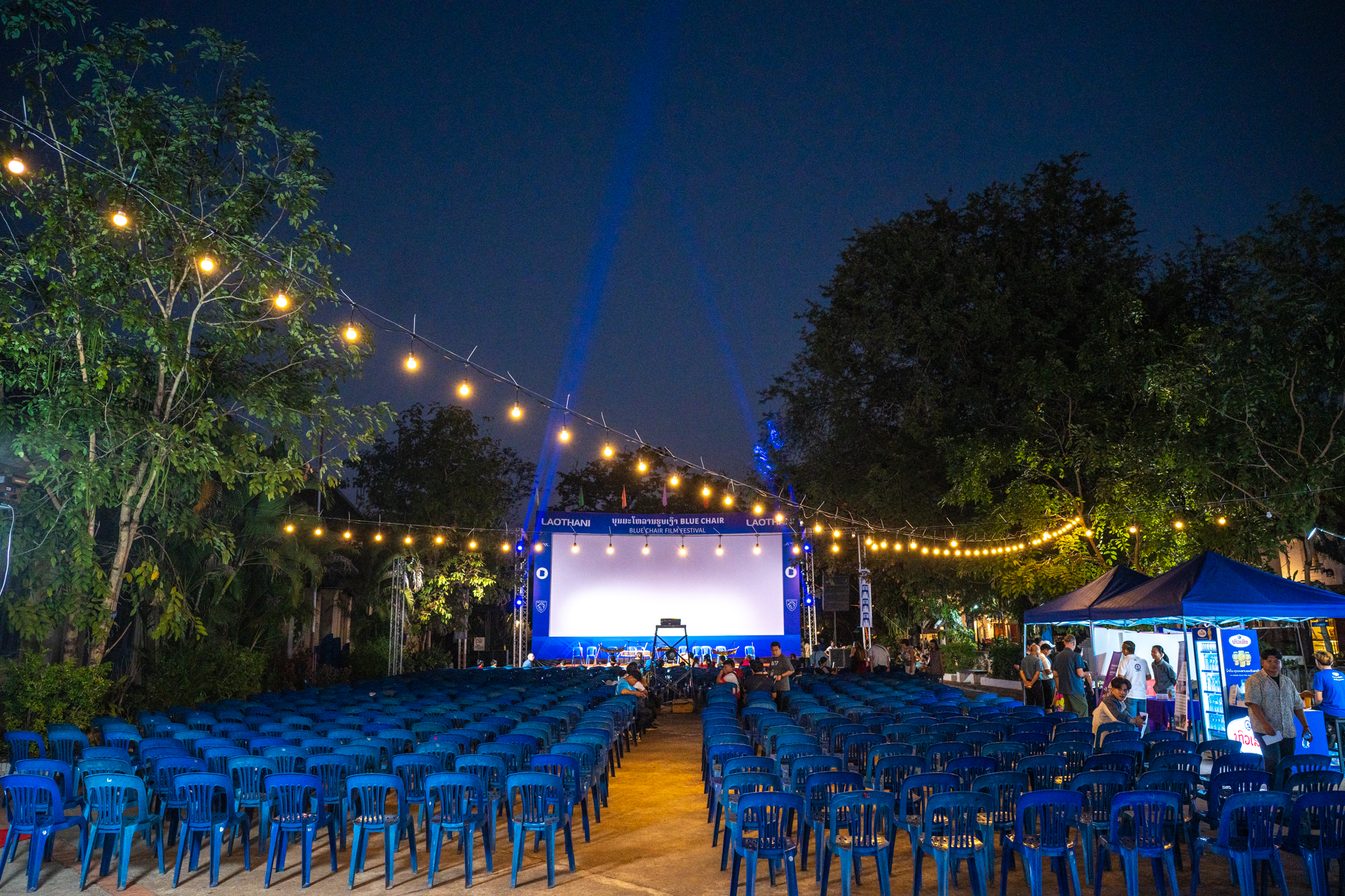
The Blue Chair Film Festival doesn’t look like most film festivals. There are no velvet ropes, no tickets, no awards ceremonies. Instead, there are hundreds of blue plastic chairs set out in the open-air courtyard of a century-old traditional Lao house and a primary school. Above them, a screen with a thoughtfully selected film from the region. Entry is free, and it always has been.
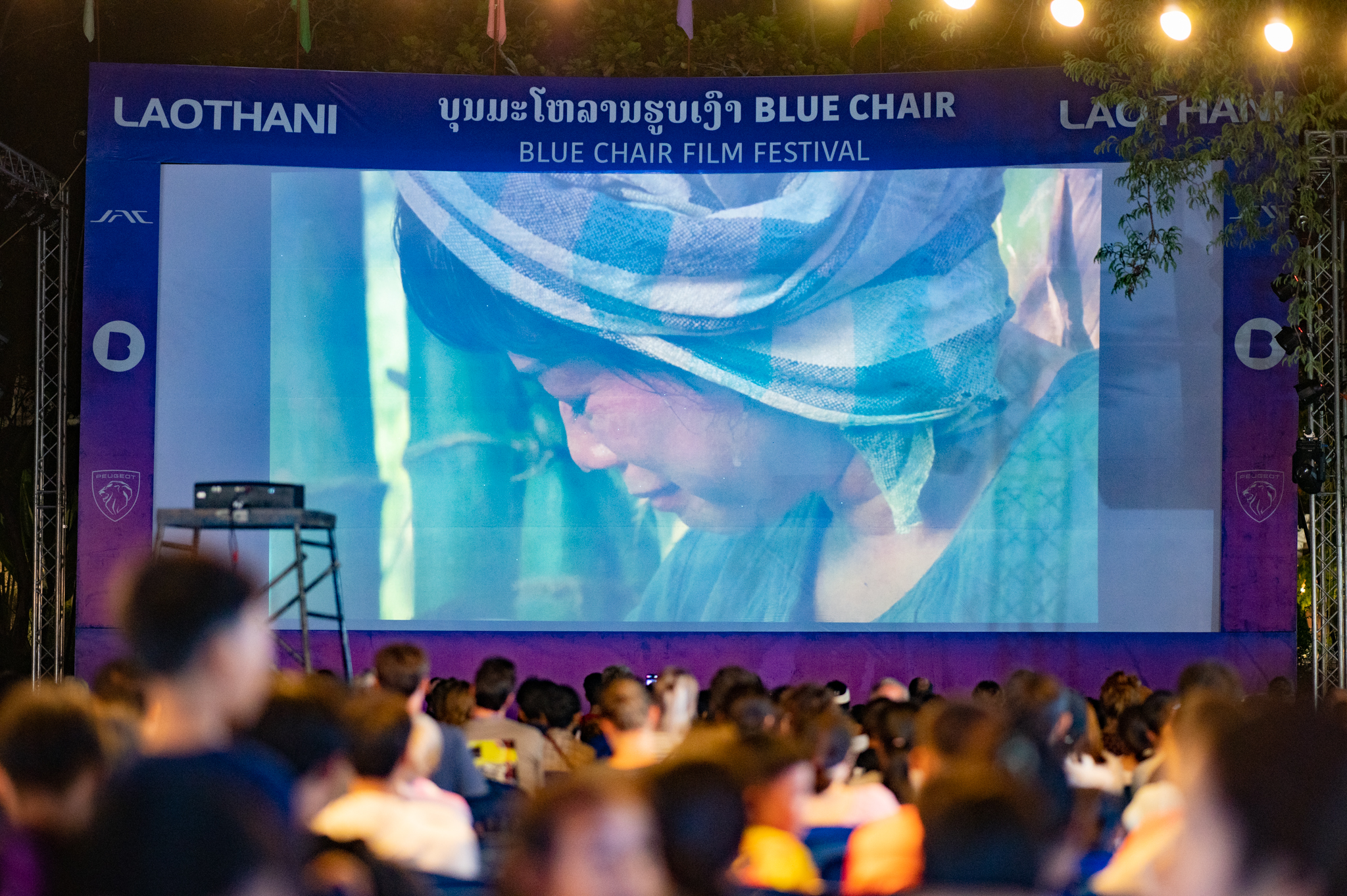
The last cinema in Luang Prabang closed in 1985. That absence is less an obstacle than a provocation — or, for Blue Chair, simply a reason to exist. Founded in 2009 as the Luang Prabang Film Festival, the organization’s mission has always been to support the nascent Lao film industry by connecting local filmmakers with the broader landscape of regional cinema. Working with expert curators from across the region, Blue Chair consistently delivers some of the strongest voices from all eleven Southeast Asian nations — mixing celebrated titles with new discoveries.
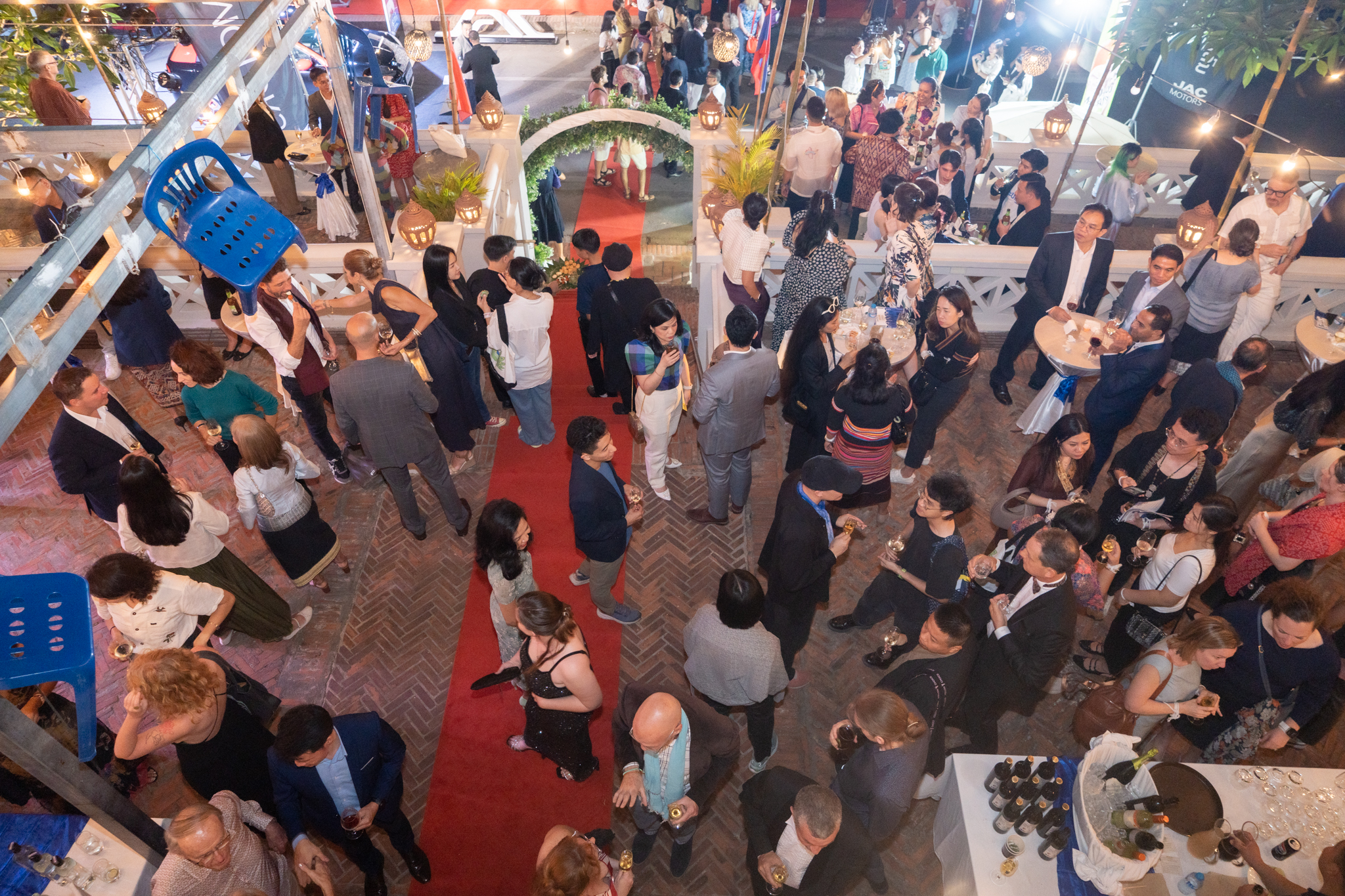
Beyond night-time screenings, the festival fills its days with more screenings, filmmaker Q&As, public discussions, and early evening live performances. But Blue Chair has always seen the unofficial program as equally vital — the late nights where filmmakers from five or six countries end up at the same table, comparing notes, and swapping stories. Collaborations are hatched. Projects find their producers. Films find their audiences.
The 2024 edition offered a sense of what’s possible: 24 features and 40 short films across 3 venues. This included films like the Indonesian political thriller Autobiography, the Vietnamese slow-cinema portrait Cu Li Never Cries, and the world premiere of Malaysian director Feisal Azizuddin’s Angkat — a project that had, in part, been developed at the festival’s own Talent Lab years earlier. That kind of arc, from workshop participant to world premiere, captures something essential about what Blue Chair is trying to build.
“People sometimes ask if we do awards,” says Sean Chadwell, Executive Director. “We don’t. Luang Prabang is the perfect atmosphere for connecting with fellow filmmakers, planning the next project, and appreciating what’s in front of you. Why get in the way of all that?” What Blue Chair has instead of competition is atmosphere.
But making it all free, in a city with no cinema infrastructure, requires real partnership and a certain kind of faith. The festival survives on the generosity of the Luang Prabang hospitality community — more than 20 local hotels partner with Blue Chair every other year to host filmmakers and guests. As for the light and sound, the live performances, and the movies themselves, regional sponsors and supporters join this effort, united by a shared belief that Southeast Asian cinema is worth investing in. Without them, there is no festival.
For more info:
The 2026 edition will run from 4 to 8 December in Luang Prabang. Full details at www.bluechair.film.
Getting there:
Lao Airlines has flights from Hanoi, Chiang Mai, and Vientiane to Luang Prabang.