


 ລາວ
ລາວ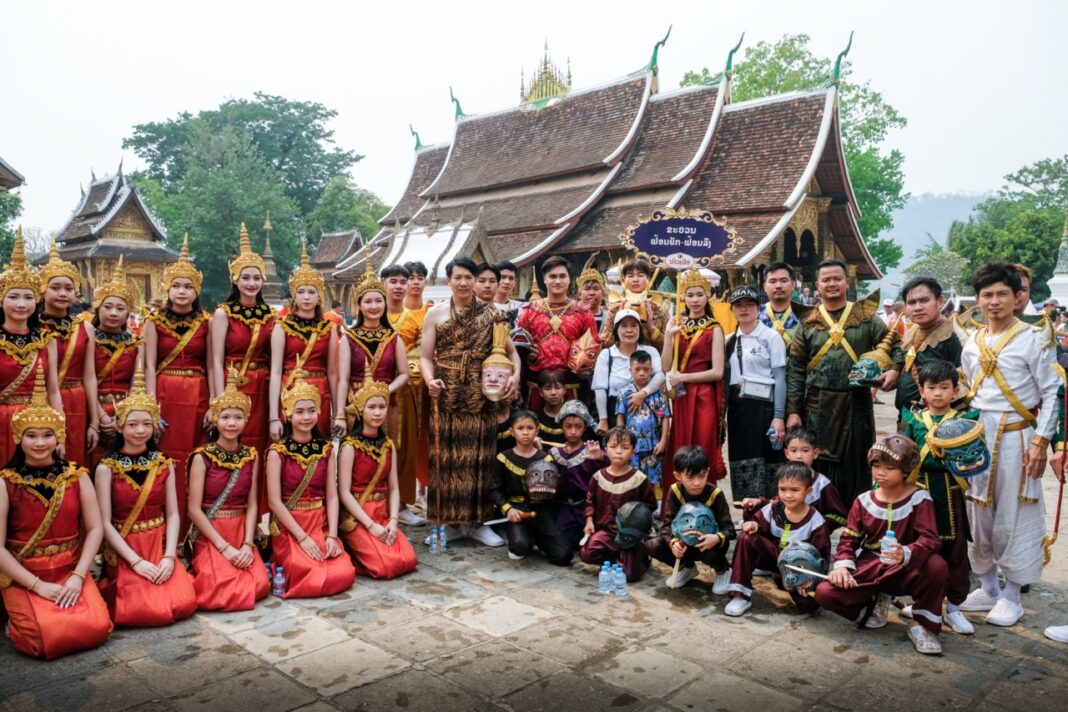


 The royal epic still dancing in Luang Prabang
Text by: Anita Preston
Photos by: Anita Preston / Evensong Film
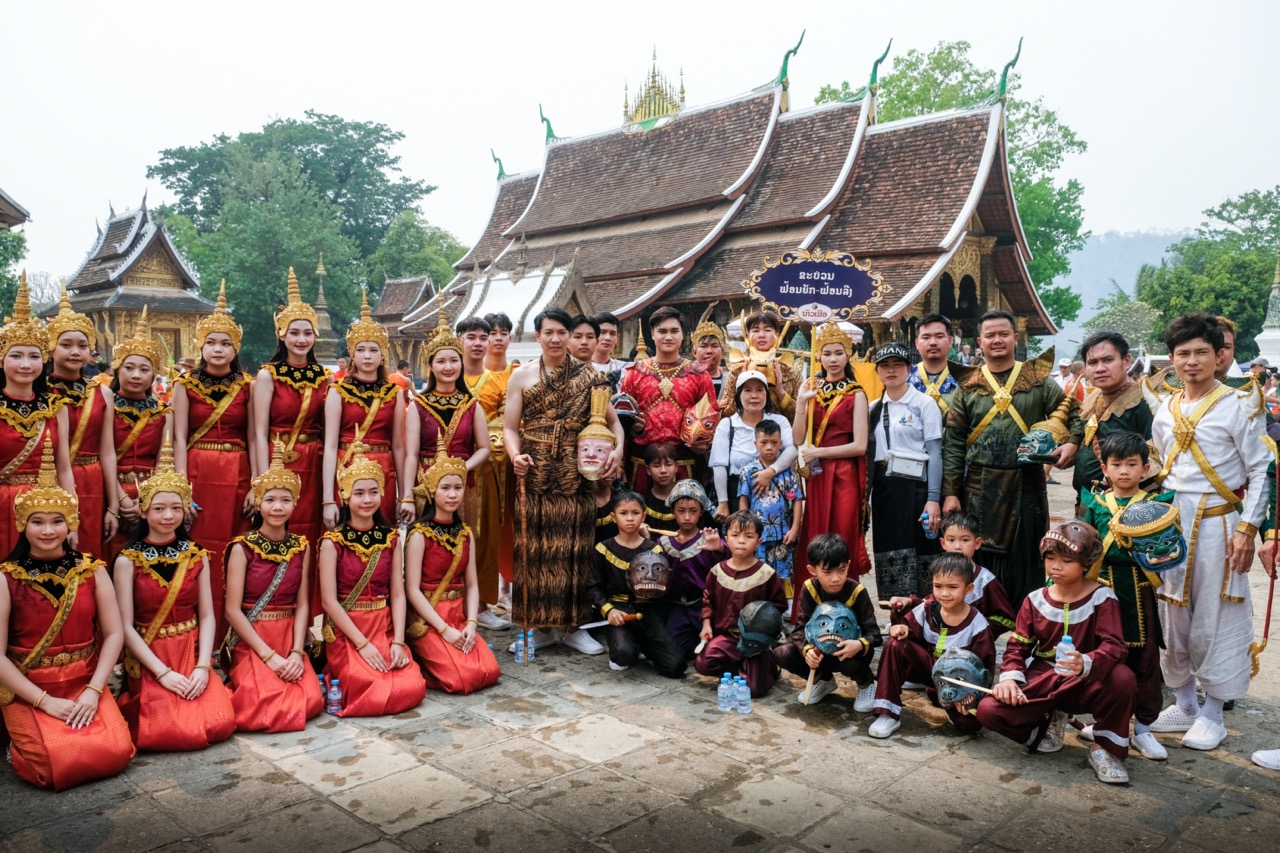
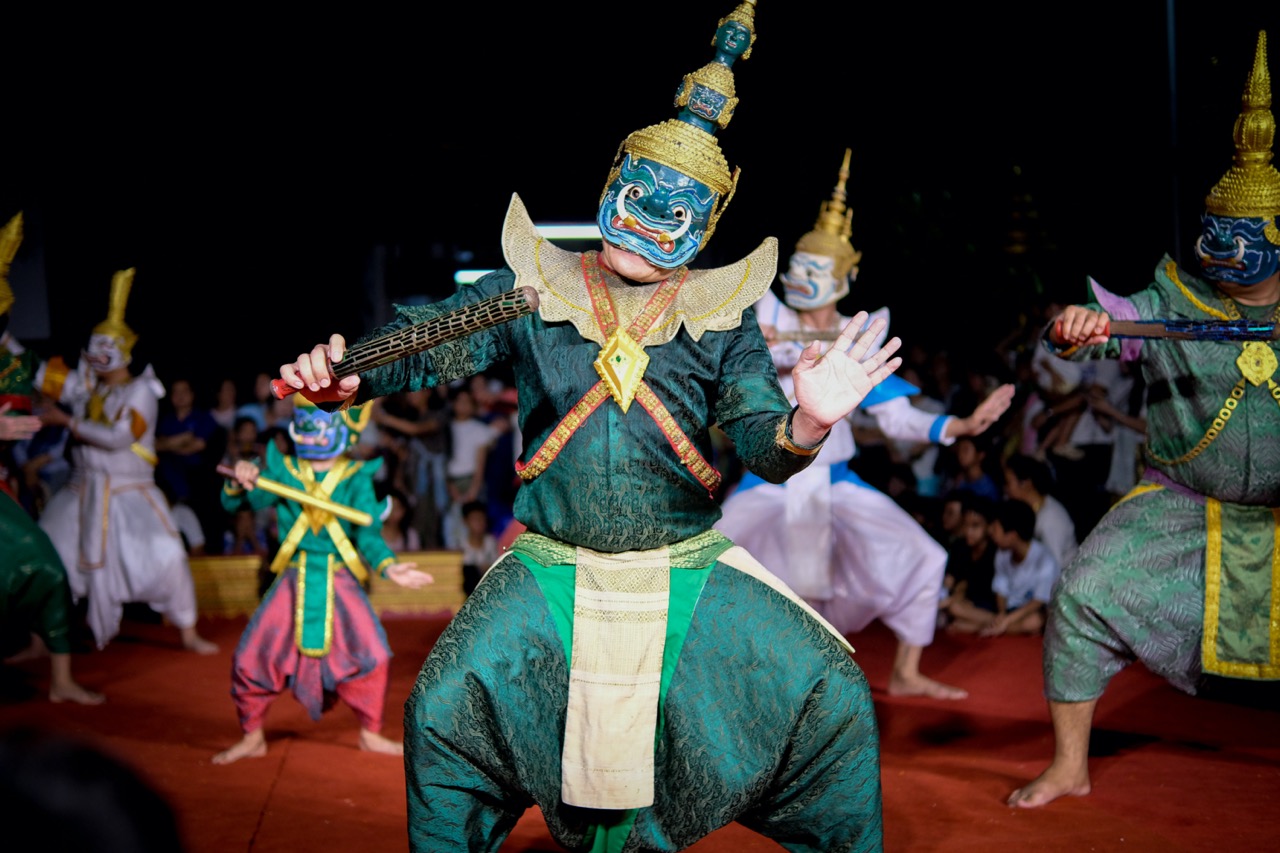
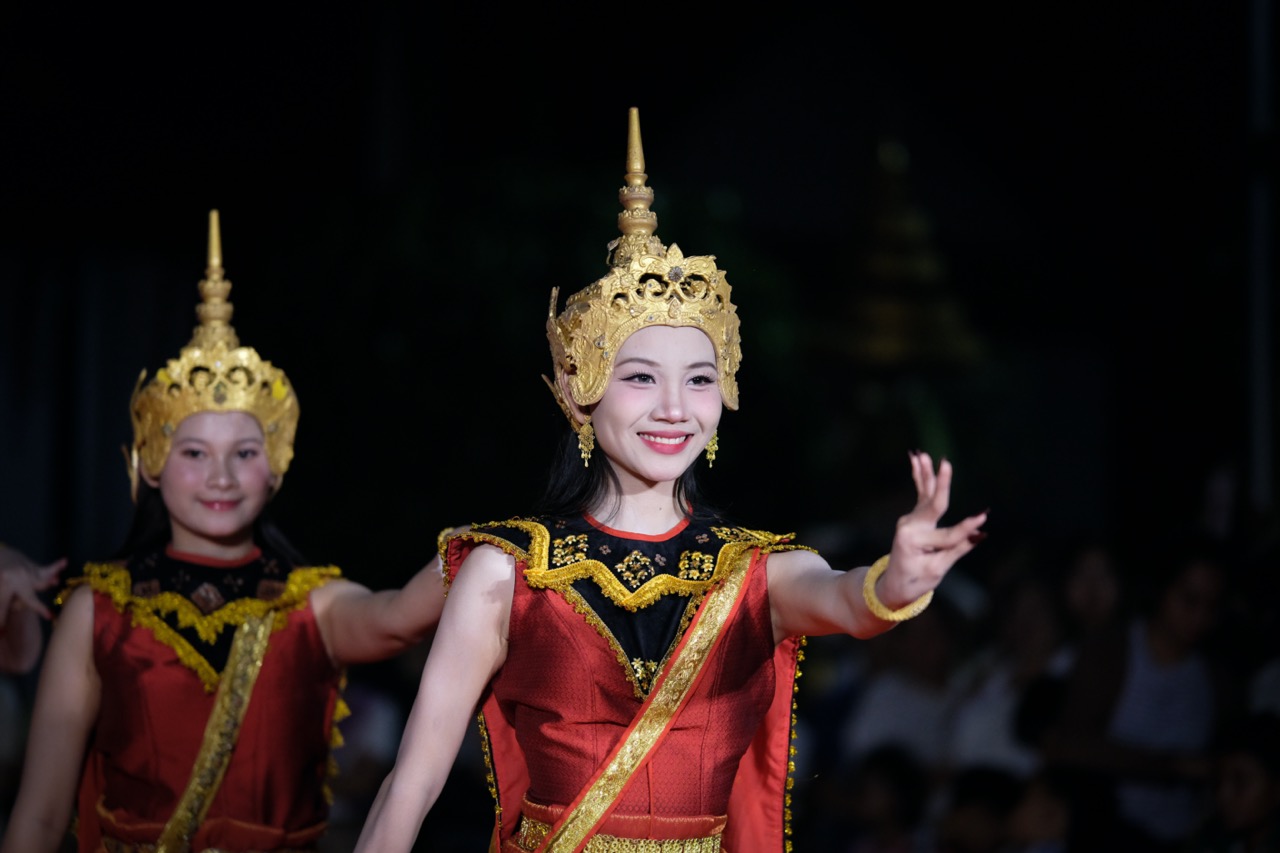
Outside the former royal palace in Luang Prabang, beside a large round pond filled with lotus, a theater stands amongst the lush foliage of the palace garden. Come sunset, strains of gongs and music fill the warm air, carried on the breeze, and the scent of exotic flowers and the whirr of cicadas add to the tropical atmosphere. Inside the building, to the left of the elegant white palace with its gilt-and-red spire, a dance troupe delights guests with its performance. Elaborate and colorful costumes clothe the dancers. On their heads sit gilded and painted masks, and centuries-old routines are performed with grace and elegance.
Here, one can watch the Lao version of the Hindu epic Ramayana, known here as Phralak Phralam, named for two of its central characters. Performances were once held exclusively in the palace for the king and staged at important celebrations. Each Lao New Year, a series of free performances still takes place on the grounds of Wat Mai, where younger audiences delight in watching Hanuman perform cartwheels, and the monkey troop scratches itself in comic imitation of fleas.
History and Origins
The Ramayana is one of the great Hindu epics, composed as a moral teaching that carries a message of duty, devotion, and righteousness. Over centuries, it spread across Southeast Asia, where it was absorbed and reinterpreted through Buddhist cultural lenses. In Laos, this adaptation became Phralak Phralam, now set in the Mekong Valley. The epic’s influence runs deep: scenes from the epic decorate the funerary carriage house at Wat Xieng Thong and adorn temples throughout Luang Prabang. Similar interpretations remain popular in Cambodia and Thailand, and all predate the Lao version.
According to tradition, when the first king of Lane Xang, Chao Fa Ngum, returned to Laos from Cambodia in the 14th century, he brought with him an entourage of artists, musicians, and dancers from Angkor who were already familiar with the epic. These performers were used to teach Buddhist values and to preserve and carry forward old traditions and customs. The story also serves a mythological function: it moves the action to the Mekong and the landscapes of Laos, reinforcing the founding myths of Lao culture.
The Performance
Two of the nine chapters of Phralak Phralam are performed in each sitting, lasting approximately two hours. A live ensemble of musicians accompanies the dancers throughout, playing wooden xylophones, gongs, flutes, cymbals, and drums to add atmosphere and dramatic tension. The musicians play from memory — no sheet music is followed — and some are young apprentices who have grown up learning the craft within their families. The theater itself houses more than one hundred masks, some very old, crafted from a combination of papier-mâché and wood using traditional techniques passed down through generations.
The story begins in the kingdom of Ayutthaya, where Phralam, the noble and virtuous prince, lives happily with his devoted wife, Nang Sida. Their peace is shattered when Thodsakan, the powerful demon king of Lanka, becomes consumed by desire for Nang Sida and devises a scheme to abduct her. Using trickery and dark magic, he lures Phralam away and seizes Nang Sida, carrying her across the sea to his island fortress. Phralam, grief-stricken and resolute, vows to bring her home.
To do so, he forges an unlikely alliance. The monkey god Hanuman pledges his loyalty and musters his vast army of monkeys, who perform the seemingly impossible feat of constructing a bridge of stone and timber across the ocean to Lanka. The battle that follows is long and costly. Thodsakan is a formidable enemy, shielded by divine protections granted to him by the gods — protections against all mythological beings and celestial creatures. Yet in his pride, he never thought to ask for protection against mortal men, and it is this oversight that proves fatal. Phralam, a human incarnation of the god Vishnu, ultimately defeats him and rescues Nang Sida, restoring order and righteousness to the world.
Throughout the epic, the deeper moral current is clear: duty, loyalty, and virtue will ultimately prevail over power obtained through treachery and violence.
The Characters
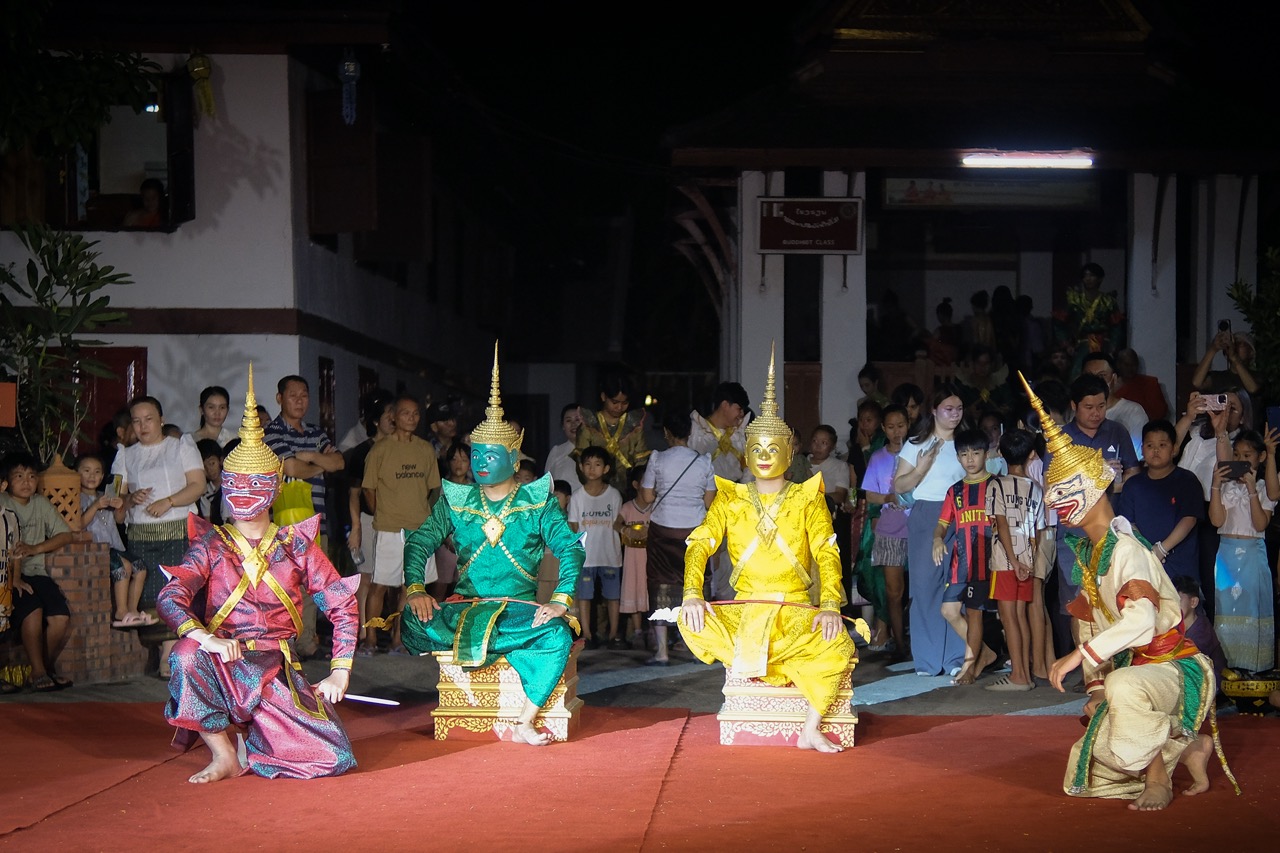
Each character in the performance is identified by a distinctive mask and costume color, making them easy to follow even for first-time visitors.
Phralam (Rama)
Wearing a green mask and carrying a bow, Phralam represents the perfect manifestation of man and the seventh incarnation of Vishnu. Brave and virtuous, he shares many adventures with his devoted companion, the monkey god Hanuman.
Phralak (Lakshmana)
Recognizable by his golden mask and yellow costume, Phra Lak is the stoic and loyal younger brother of Phralam. Together, the two brothers set out to rescue Nang Sida from Thodsakan’s island kingdom of Lanka.
Nang Sida
Married to Phralam and a symbol of love and devotion, she is abducted by Thodsakan and held captive in Lanka until Phralak and Phralam come to her rescue.
Thodsakan (Ravana)
The ten-headed demon antagonist of the story is identifiable by his green face. Thodsakan seizes the throne of Lanka, kidnaps Nang Sida, and imprisons her on his island. Though protected from mythological creatures by a divine boon, he made one fatal oversight: he never sought protection from humans.
Hanuman
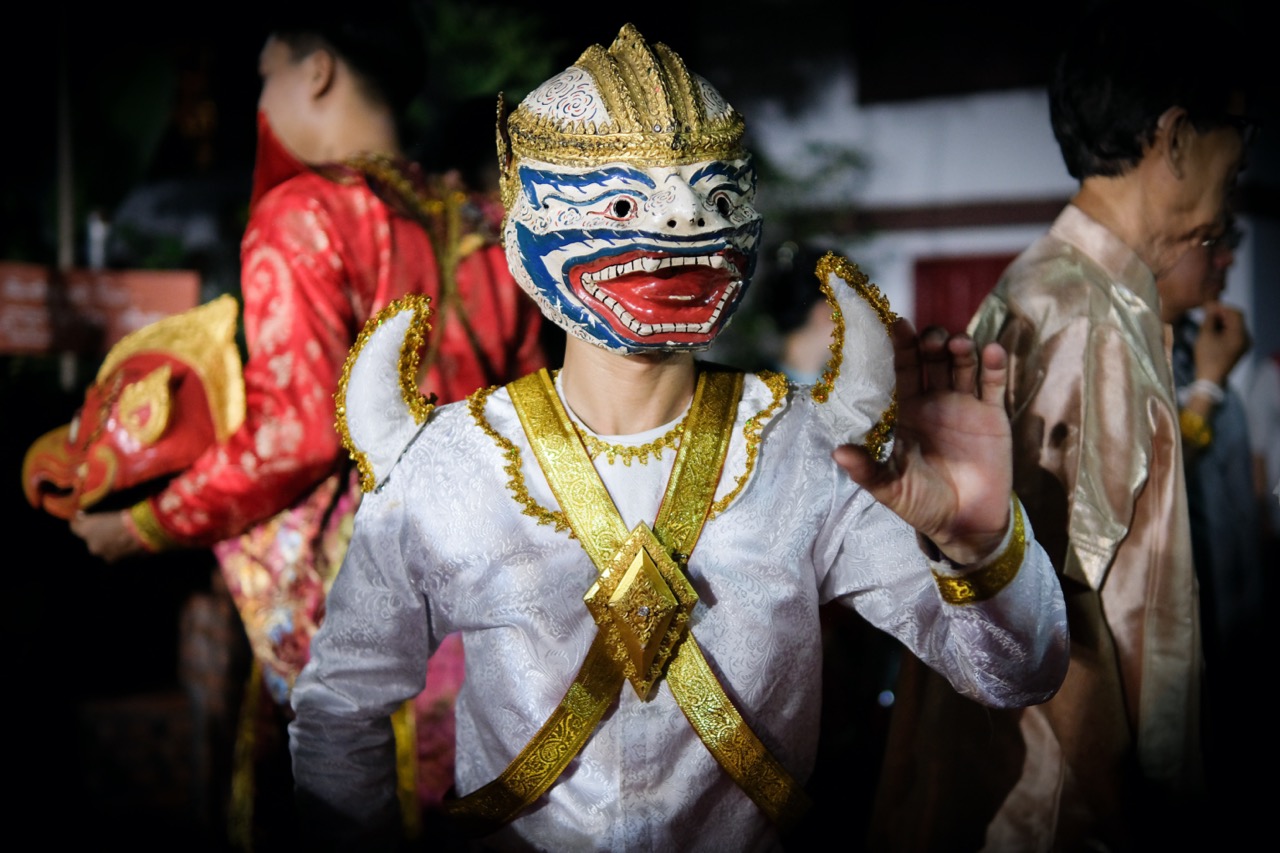
Clothed in white with a monkey’s head, Hanuman is the Lord of the Monkeys and one of the most beloved characters in the epic. He serves as the messenger between Nang Sida and Phralam and, at the story’s end, undergoes a transformation into human form.
Sadayu
This blue-robed garuda (half-man, half-bird) is said to be 60,000 years old. Sadayu witnesses Nang Sida’s abduction and confronts Thodsakan directly, losing his wings in the struggle and falling into the jungle. Phralam finds him and receives Nang Sida’s ring from him as proof of her captivity.
Samphati
Clothed in red, Samphati is the older brother of Sadayu and was the guardian of the mountains facing Lanka. Initially opposed to Phralam, he eventually joins the alliance against Thodsakan and carries Hanuman on his back into battle.
The Monkey Army
Hanuman’s loyal forces, who help rescue Nang Sida by constructing a bridge from the mainland to the island of Lanka. Their antics — scratching for fleas, tumbling across the stage — are a highlight for younger audiences.
For more information:
Performances occur several times per week, depending on the season. Tickets can be bought at the ticket office at the Luang Prabang National Museum.
Getting there:
Lao Airlines flies to Luang Prabang from Vientiane, Bangkok, Hanoi, and Chiang Mai.